- Haolin Lu, UC San Diego
- Ishit Mehta, UC San Diego
- Haodong Li, UC San Diego
- Yu Fu, UC San Diego
- Tzu-Mao Li, UC San Diego
- Ravi Ramamoorthi, UC San Diego
Video Numerical Continuation for Differentiable Inverse Rendering
SIGGRAPH Asia 2026
Abstract
Main Figures
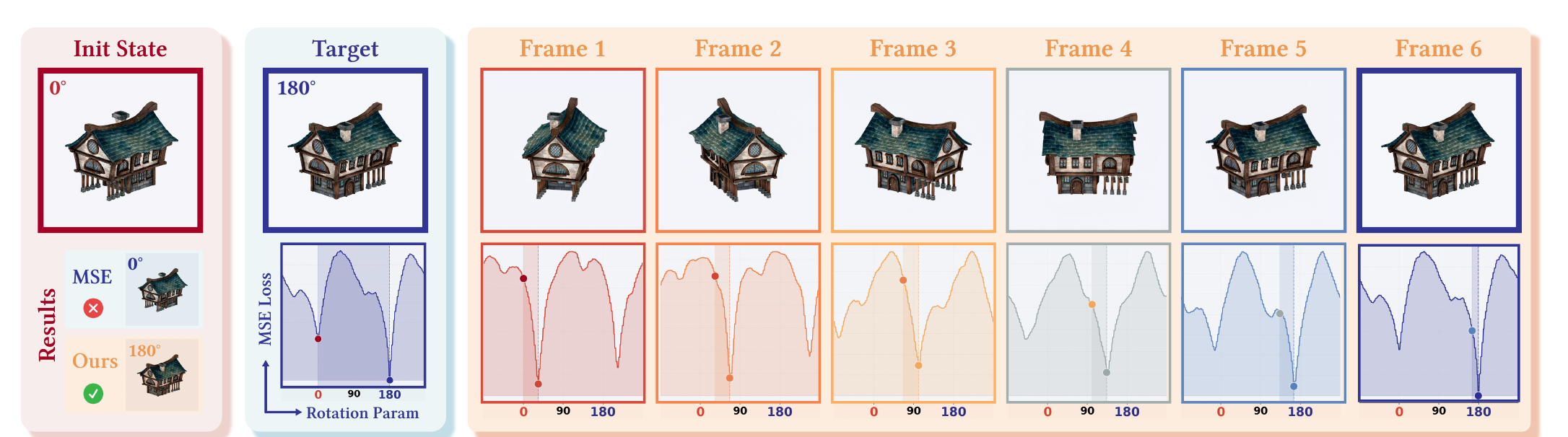
Figure 2. Rotation Optimization. First column: We optimize
the rotation of a house around the up-axis using a differentiable
renderer [Laine et al. 2020], with image Mean Square Error as the
objective. Optimization with MSE against the target image becomes
trapped at the initial state, while our method converges to the correct
rotation. Blue block: This occurs because the initial (0°)
and target (180°) states exhibit strong visual similarity due to
partial symmetry, making the initial state a local minimum, as shown in
the loss landscape. Progress toward the global minimum would initially
increase the loss, preventing standard gradient descent from escaping
this minimum. Orange block: Instead of directly optimizing
against the target image, we sequentially use intermediate frames from
the generated video as targets. This gradually reshapes the loss
landscape so that each intermediate objective admits a nearby local
minimum reachable by gradient descent from the current state. These
minima progressively move toward the global minimum, enabling global
convergence. For each step, we visualize the parameter updates under
idealized gradient descent: the left marker denotes the parameter value
before the update, while the right marker denotes the updated value.
Over time, the trajectory does converge to the global minimum after all
6 frames.
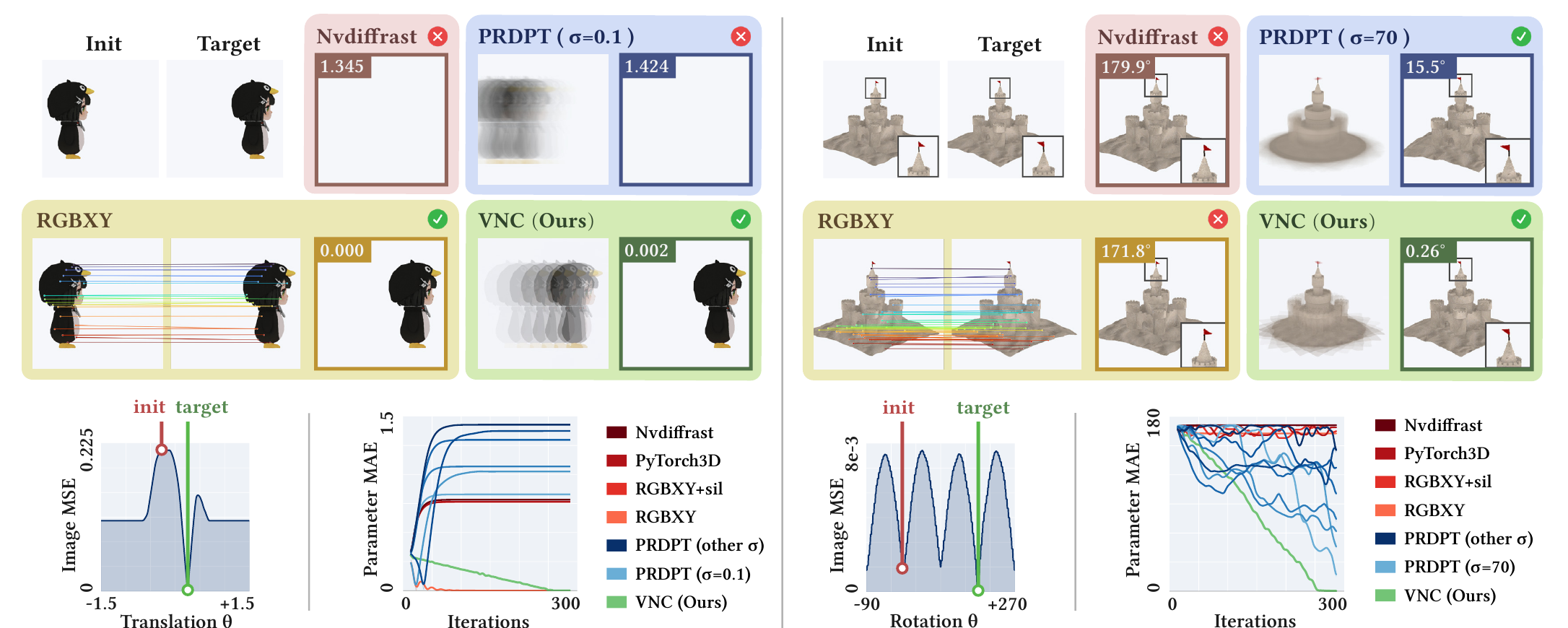
Figure 3. Inverse Rendering with Local Minima. Non-convexity is
common in inverse rendering, as illustrated by two 1D examples. In
PenguinGirl (left), optimizing the x-translation yields a local minimum
when moving far to the left (out of view), since the image MSE also
decreases. Moving right toward the target produces a flat plateau until
the objects overlap, and both effects hinder optimization. SandCastle
(right), which exhibits approximate fourfold symmetry, has four local
minima in yaw optimization. We compare four methods under identical
number of iterations and learning rates, reporting parameter mean
absolute error (MAE) in the top-left labels. Nvdiffrast [Laine et al.
2020] gets trapped in local minima due to its naive objective. PRDPT
[Fischer and Ritschel 2023] smooths the loss, which can alleviate local
minima and plateaus but still leads to unstable or suboptimal
convergence. RGBXY [Xing et al. 2022] leverages pixel correspondences
and works well for translation, but provides little improvement in the
SandCastle case. In contrast, our method generates a video trajectory
(shown as overlays) and optimizes along it using Nvdiffrast, escaping
local minima and converging to the correct solution in both cases.
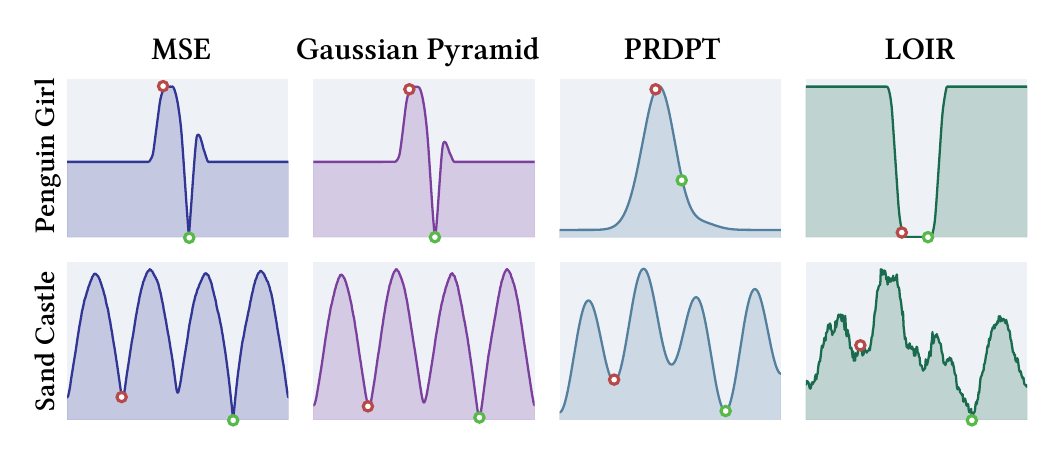
Figure 4. Loss Smoothing and Reshaping. We visualize the loss
landscapes for the examples in Fig. 3 under different objectives,
with initial and target parameters indicated by red and green
markers, respectively. Gaussian pyramid and PRDPT filter the loss
landscape in different ways, but may still preserve non-convex
structures (second row) and can even blur out the global minimum
(first row, third column). LOIR reshapes the first loss landscapes
pretty well, but only makes the second landscape noisier.